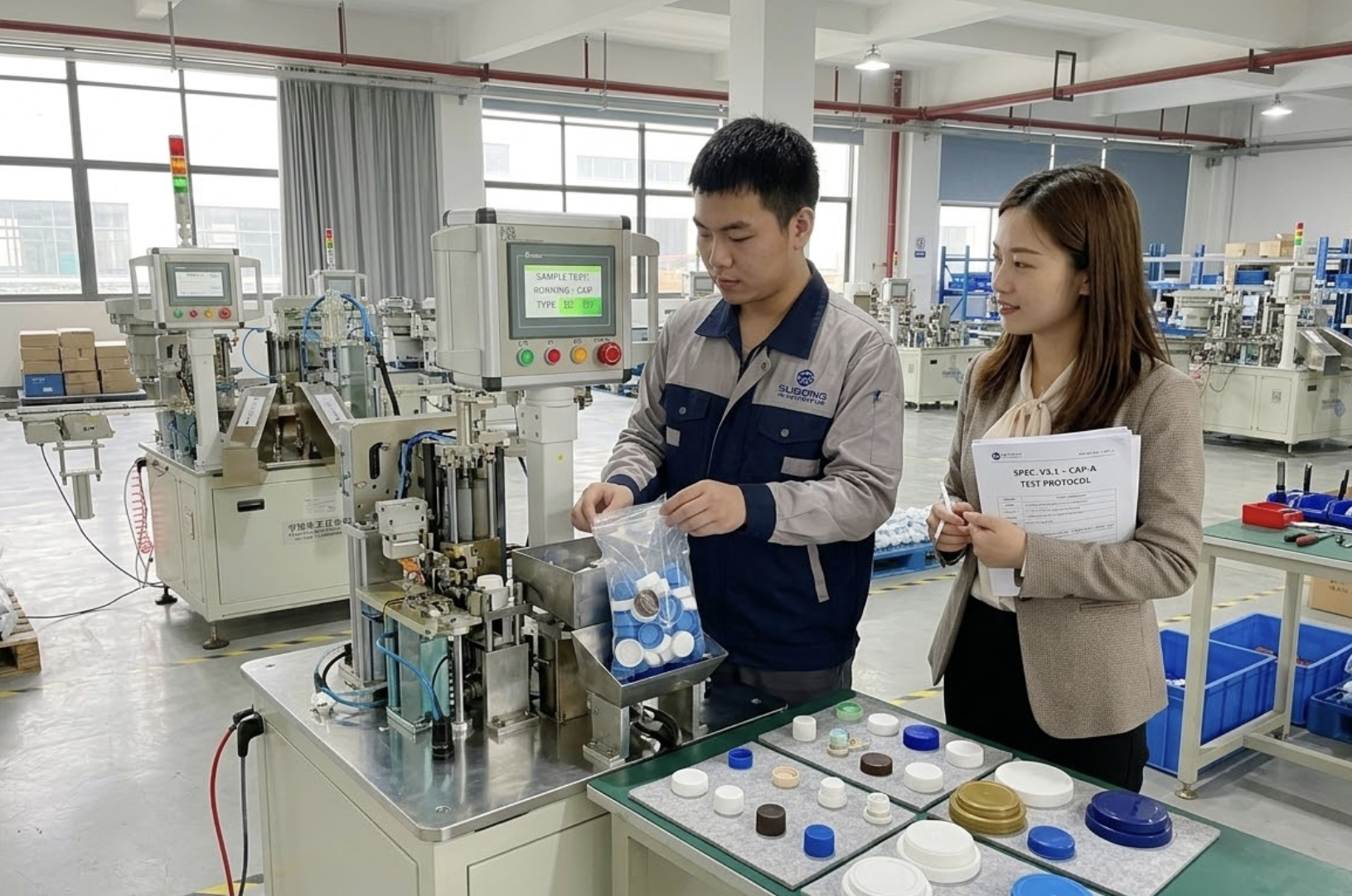
Cap Assembly Machine Procurement Guide: Matching Cap Structure, Speed, and Supplier Capability for High-Volume Lines
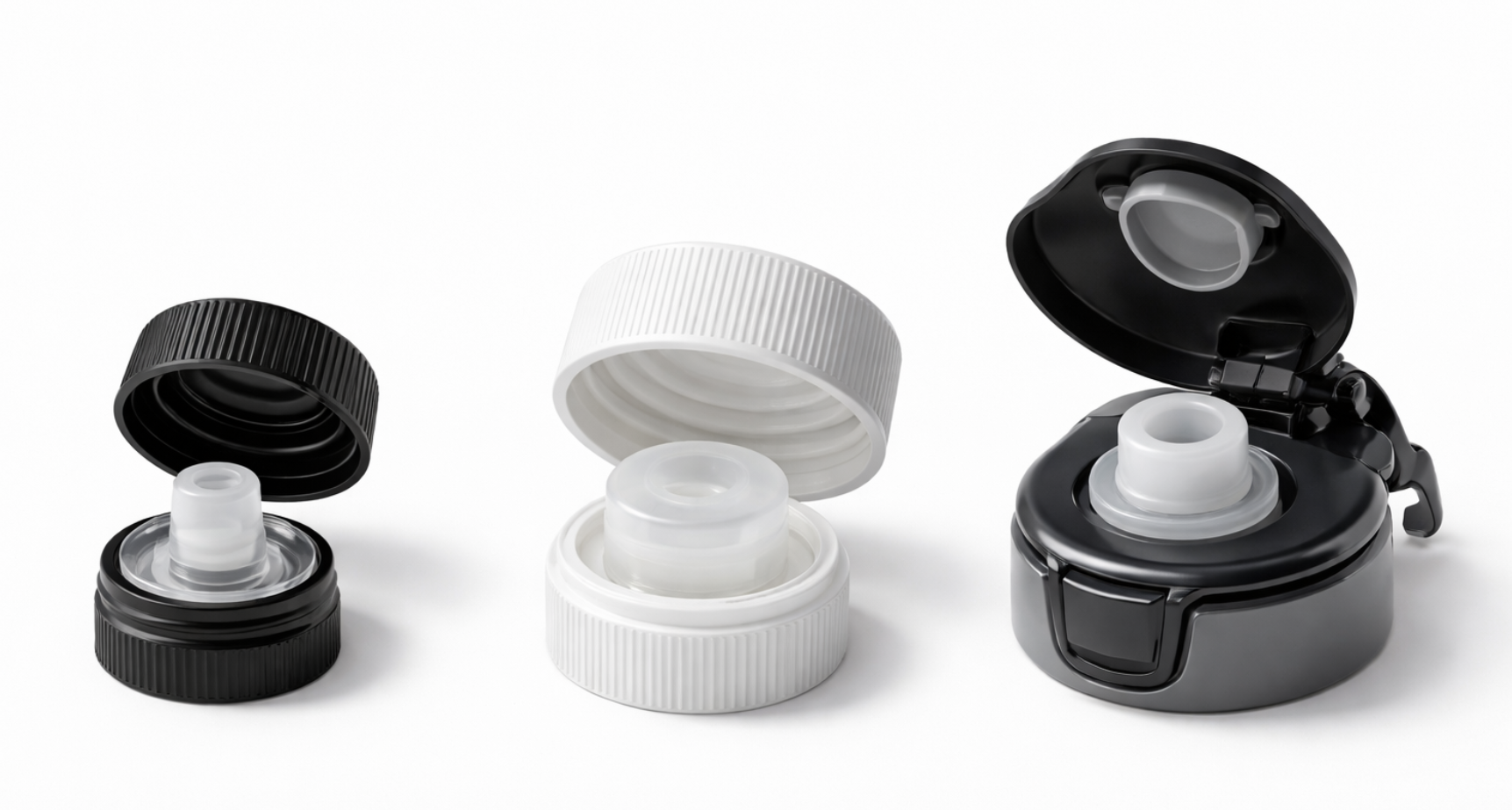
YUYAO, ZHEJIANG, CHINA, October 20, 2026 /EINPresswire.com/ -- Bottle cap assembly sits at the intersection of mechanical precision and production efficiency. For manufacturers scaling up output, finding the right cap assembly machine for high-volume production involves far more than comparing price lists. Cap structures vary widely — from simple 2-piece designs to complex 3-piece configurations with gaskets, from push-lever sports closures to flip-top silicone valve caps. Each structure places distinct demands on feed mechanisms, assembly force, detection logic, and cycle timing. A machine optimized for one cap type often performs poorly on another. That fundamental mismatch, rather than equipment failure, is the most common cause of throughput bottlenecks and quality inconsistencies on high-volume packaging lines.
Understanding this complexity is the first step toward making a sound procurement decision. The sections below break the selection process into four practical steps.
Step 1 — Map Your Cap Type to the Right Assembly Mechanism
Cap geometry determines machine architecture. A 2-piece essential oil cap, for example, requires precise axial alignment between a small inner component and an outer shell. Misalignment at speed causes cosmetic defects or functional failures. A 3-piece daily chemical cap — typically combining a body, gasket, and outer cover — demands sequential feeding stations and in-process detection at each stage. A push-lever sports cap adds mechanical complexity still, since the lever mechanism must seat correctly before the cap passes inspection.
Ningbo Huagong Automation Technology Co., Ltd. designs machines specifically matched to these structural differences. Huagong Automation offers three machine categories matched to structural complexity. The Essential Oil Bottle Cap Assembly Machine (model HG-6066) handles 2-piece caps at 140 to 160 pieces per minute, with a footprint suited to fragrance and personal care lines. The Daily Chemical Bottle Cap Assembly Machine (model HG-021) targets 3-piece configurations — body, gasket, outer cover — at 60 to 100 pieces per minute, covering detergent, disinfectant, and cleaning product applications. The Fully Automatic Push-Lever Sports Cap Assembling Machine (model HG-040) addresses lever-style closure complexity at 60 pieces per minute. All three run fully automatically with single-operator supervision and PLC touchscreen control with stored recipe switching. Each machine runs fully automatic operations — including feeding, assembly, and detection — with a single operator managing the line.
The practical takeaway: before requesting any quotation, map the cap's component count, material tolerances, and closure mechanism to a machine category. Mismatched categories waste both time and budget.
Step 2 — Match Throughput Targets to Verified Machine Speed
Rated machine speed and effective throughput are different figures. Rated speed reflects peak mechanical capacity under ideal conditions. Effective throughput accounts for changeover time, minor stoppages, yield rate, and operator response. For procurement purposes, effective throughput is the number that matters.
When evaluating options, start with annual production targets and work backward. Factor in the number of daily shifts, planned maintenance windows, and the possibility of seasonal volume spikes. A machine rated at 100 pieces per minute with a 95% yield rate delivers meaningfully different output than one rated at the same speed with an 88% yield. Additionally, consider how quickly operators can switch the machine between different cap specifications. Touch-screen HMI interfaces, like those used across Huagong Automation's cap machine range, support faster parameter adjustment and reduce the downtime associated with product changeovers.
Matching speed to demand also prevents over-investment. A facility running two shifts on a single SKU may not need the highest-speed option available. Conversely, a multi-SKU line with variable order cycles benefits from machines that combine acceptable speed with rapid reconfiguration capability.
Step 3 — Evaluate Non-Standard Customization Depth
Standard catalog machines rarely fit every production environment. Floor space constraints, upstream conveyor heights, specific cap dimensions outside common ranges, or integration requirements with existing filling and capping lines — all of these create scenarios where off-the-shelf specifications fall short.
A supplier's genuine customization capability shows in the pre-sales process. Look for suppliers who conduct on-site technical consultations, collect specific production data before proposing a solution, and present a feasibility analysis before finalizing design specifications. Free sample testing — where the supplier validates machine performance against the actual cap components — provides objective evidence of customization depth rather than general claims.
Huagong Automation structures its pre-sales process around this methodology. Technical data collection, design feasibility discussion, and collaborative refinement before confirmation are standard steps. Non-standard product development based on specific client requirements falls within the company's stated scope of business, alongside localization design of imported equipment and custom production line development. This process reduces the risk of discovering specification mismatches after equipment delivery.
Step 4 — Verify Supplier Credentials and Cross-Border Delivery Capability
For international buyers, supplier qualification involves four distinct verification areas.
First, quality certifications: for cap assembly machines exported to European markets, EU CE certification is a practical import requirement, not just a marketing signal. ISO 9001 provides the auditable process documentation that OEM procurement teams require before supplier approval. Verify that both certificates cover the specific machine category being purchased, not just the company at a corporate level.
Second, R&D and customization depth: High-Tech Enterprise certification (held by Huagong Automation since 2024) requires documented R&D headcount, active patents, and commercially deployed proprietary technology — criteria that distinguish genuine engineering capability from catalog reselling.
Third, international delivery history: equipment that has been delivered and commissioned in Europe, the Americas, Southeast Asia, and the Middle East indicates logistics competence and experience with varying regulatory and installation environments.
Fourth, cross-border support infrastructure: after-sales service for overseas clients requires more than a phone number. Response time commitments, spare parts express shipping, and remote commissioning capability all determine how quickly a production issue gets resolved across time zones.
The Hidden Variable: How After-Sales Support Affects Long-Term Machine Performance
Equipment performance at commissioning is only one data point. The more financially significant question is how that performance holds over three to five years of production.
Support structure is a key variable here. For cap assembly applications with multi-shift schedules, the financially relevant after-sales metrics are: response time to a critical stoppage (Huagong Automation commits to 2 hours), spare parts lead time (EMC express, typically 3 to 5 business days internationally), and warranty scope (2 years on PLC and servo motor components, 1 year on full equipment). Free commissioning and operator training are standard. The practical implication for procurement teams: these commitments should appear in the supply contract, not just in sales materials.
Over a multi-year operating period, this service model translates directly into higher uptime and lower maintenance costs — both of which affect the actual return on the equipment investment.
A Final Selection Checklist Before Signing With Any Cap Assembly Machine Supplier
Before committing to a supplier, run through these four verification points. First, confirm that the machine category matches the cap's structural complexity — component count, closure mechanism, and material tolerances. Second, verify effective throughput against production targets, not just rated speed. Third, assess the supplier's customization process through their pre-sales workflow — on-site consultation, sample testing, and feasibility documentation are meaningful indicators. Fourth, validate certifications, international delivery history, and after-sales support capability for cross-border operations.
Cap assembly equipment represents a long-term production commitment. The selection decision deserves the same systematic rigor applied to any major capital investment. Suppliers who support that process with transparent technical engagement and verifiable credentials are the ones most likely to deliver reliable performance over time.
For further information on cap assembly machine specifications and custom solution consultations, visit https://www.hgautomachine.com/.
Ningbo Huagong Automation Technology Co., Ltd.
Legal Disclaimer:
EIN Presswire provides this news content "as is" without warranty of any kind. We do not accept any responsibility or liability for the accuracy, content, images, videos, licenses, completeness, legality, or reliability of the information contained in this article. If you have any complaints or copyright issues related to this article, kindly contact the author above.